


 Send Inquiry
Tray Arranger Machine
Price 1050000 INR/ Piece
Tray Arranger Machine Specification
- Shape
- Rectangular base
- Phase
- Three Phase
- Torque
- N/A (electromechanical drive systems with controlled speed)
- Product Type
- Tray Arranger Machine
- General Use
- Arranging and sorting trays in automation and packaging lines
- Material
- Mild Steel (MS), Stainless Steel contact parts (SS304/SS316)
- Capacity
- Up to 1000 trays/hour (depends on tray size and configuration)
- Weight (kg)
- Approx. 850 kg
- Computerized
- Yes
- Automatic
- Yes
- Touch Screen
- Yes
- Control System
- PLC Based
- Surface Treatment
- Powder Coated
- QC System
- Standard in-process QC checks
- Tolerance
- 0.5 mm
- Voltage
- 220/380V, 50-60 Hz
- Dimension (L*W*H)
- 3200 x 1200 x 1650 mm
- Color
- Industrial Grey/Blue
- Tray Dimensions Supported
- Customizable (typical: 150x100 mm up to 600x400 mm)
- Installation
- On-site support available
- Operation Mode
- Continuous / Intermittent (programmable)
- Conveyor Speed
- Adjustable, up to 20 meters/min
- Output Accuracy
- 99.8%
- Noise Level
- < 70 dB
- Power Consumption
- 3.2 kW
- No. of Trays Handled Simultaneously
- Up to 10 (customizable)
- Safety Features
- Emergency stop, Safety guards, Overload protection
- Operator Requirement
- Single operator
Tray Arranger Machine Trade Information
- Minimum Order Quantity
- 1 Piece
- Supply Ability
- 30 Pieces Per Month
- Delivery Time
- 1 Months
Tray Arranger Machine About
Tray Arranger Machine is extremely appropriate for the large-scale production of food enterprises. The machine is quite profitable for the large production lines and allows for simple arrangement as well as efficient transportation of food products. The machine is of low power consumption and needs low maintenance. It is a labor friendly machine, simple to operate. Model number is AFM TAM and has a production capacity of 6000 Pieces per Hour. The machine is applicable for Industries pf Sweets, Namkeen & Bakery.
Product details
|
Material |
Stainless Steel |
|
Power Consumption |
1.5 kW |
|
Warranty |
1 Year |
|
Model No. |
AFM TAM |
|
Voltage |
220 V |
|
Phase |
Single Phase |
|
Weight |
300 Kg Approx |
|
Material Grade |
SS304 |
|
Capacity |
6000 Pieces per Hour |
|
Automation Grade |
Automatic |
|
Brand |
Aksar Food Machine |
|
Machine Type |
1- Stage |
|
Usage/Application |
Sweets,Namkeen & Bakery Industries |
Technical Details
Superior Flexibility and Customization
Accommodating customizable tray dimensions and programmable operation modes, this tray arranger fits seamlessly into diverse production requirements. Businesses can optimize processes by choosing between continuous or intermittent operation and arranging up to 10 trays simultaneously to maximize throughput and workflow efficiency.
User-Centric Design and Safety
Engineered for user friendliness, the machine requires only a single operator and boasts an intuitive PLC-based touch screen interface. Comprehensive safety features-such as emergency stop, overload protection, and safety guards-ensure operator peace of mind and adherence to industrial standards, even in high-paced environments.
High Performance and Reliability
Delivering output accuracy of 99.8% and minimal maintenance, this tray arranging system offers dependable performance. Powder-coated mild steel construction and stainless-steel contact parts promote longevity, while advanced in-process QC checks guarantee consistent quality output across various tray configurations.
FAQs of Tray Arranger Machine:
Q: How does the Tray Arranger Machine enhance automation in packaging lines?
A: The Tray Arranger Machine streamlines the process of sorting and arranging trays by automatically and precisely handling up to 1,000 trays per hour. Its adjustable speed, high accuracy, and programmable operation modes enable integration into any automated production line, significantly reducing manual labor and increasing overall efficiency.Q: What tray sizes are supported by the machine and can dimensions be customized?
A: This machine is designed to handle a wide range of tray sizes, typically from 150x100 mm up to 600x400 mm. Tray dimensions are fully customizable to accommodate specific production needs, making the system versatile for various industries.Q: When should the continuous or intermittent operation modes be used?
A: Continuous mode is ideal for large batch processing where uninterrupted throughput is required, while intermittent mode is recommended for applications requiring periodic halts for quality checks or synchronization with other equipment. Both operation modes can be programmed according to the production workflow.Q: Where can the Tray Arranger Machine be installed and what support is available?
A: The machine is suitable for installation in industrial automation and packaging facilities. On-site installation support is available to assist with setup, commissioning, and operator training, ensuring a smooth implementation and production start-up.Q: What is the process for arranging and sorting trays in this machine?
A: Trays are fed onto the adjustable conveyor, where the machine handles up to 10 trays simultaneously. Using a PLC-based control system, the trays are sorted and arranged according to programmed parameters, while standard in-process QC checks maintain output quality throughout the operation.Q: What benefits does the Tray Arranger Machine offer over manual sorting methods?
A: Compared to manual sorting, the Tray Arranger Machine drastically increases efficiency, throughput, and consistency. Its robust construction reduces downtime, while automated controls minimize human error. The single-operator, user-friendly interface and low maintenance contribute to significant labor and cost savings.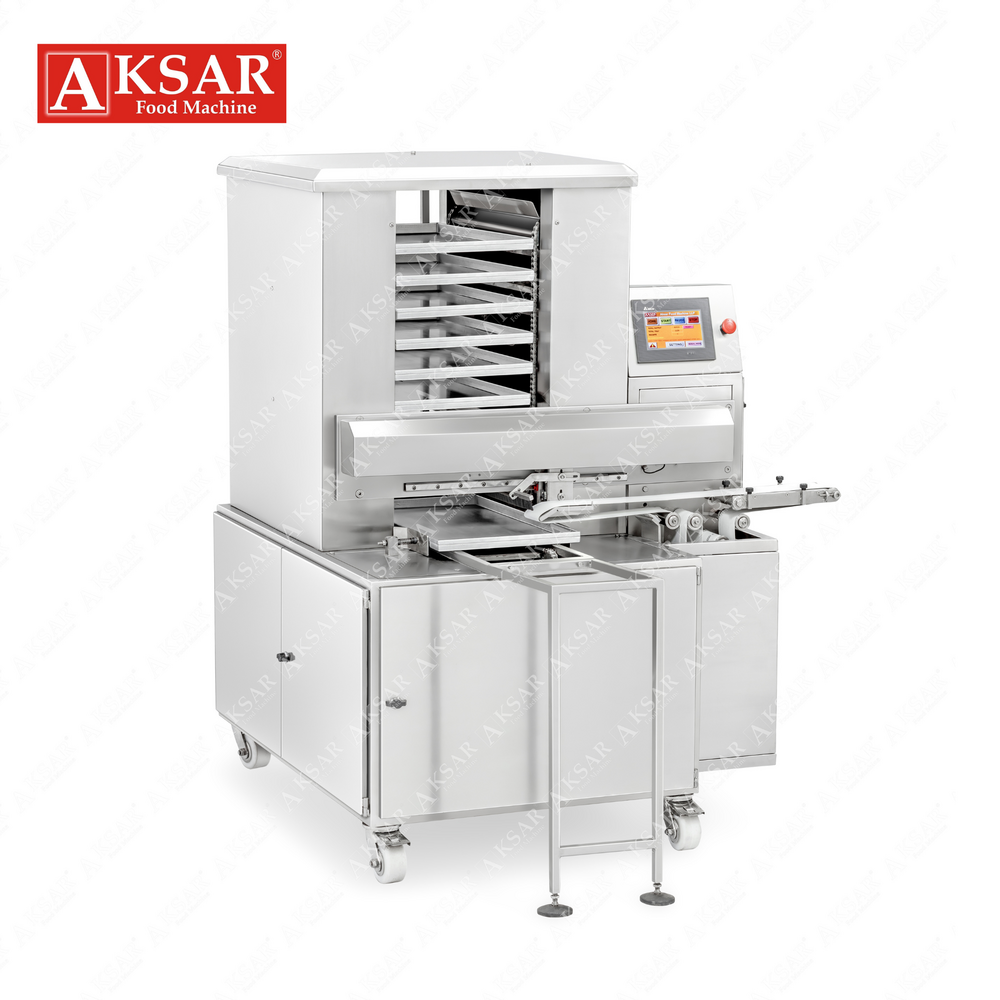

Price:
- 50
- 100
- 200
- 250
- 500
- 1000+


- 175 to 180, G.I.D.C. Estate, Phase-II, B/h Servo Petrol Pump, Ambawadi, Wadhwan,Surendranagar - 363035, Gujarat, India
- Phone : 08045814059
GST : 24ABFFA6565L1Z6

- Mr Rajesh N. Vadgama (CEO)
- Mobile : 08045814059
- Send Inquiry
- Phone No.: +91 2752 243978, 243979
Working Days Sunday to Friday (Saturday Off)
 Send Inquiry
|


Developed and Managed by Infocom Network Private Limited.


